India’s Automotive Industry in 2026: Key Trends and Future Outlook
India’s automotive industry is rapidly evolving in 2026, driven by electric mobility, hybrid technology, AI, software-defined vehicles and advanced manufacturing. Increasing investment in local production, R&D and emerging technologies is shaping a more connected, efficient and technology-driven future.
India’s automotive industry is entering a new phase in 2026. The sector is evolving beyond traditional vehicle manufacturing, with electric mobility, hybrid technology, software, artificial intelligence, connected vehicles and advanced manufacturing becoming increasingly important.
What Is Changing in India’s Automotive Industry?
Electric mobility remains one of the major developments in the Indian automotive sector. Electric vehicles are expanding across passenger cars, two-wheelers, three-wheelers and commercial vehicles. Automakers are developing new electric platforms while focusing on battery efficiency, driving range, charging infrastructure and overall vehicle cost.
Hybrid technology is also receiving greater attention. By combining an internal combustion engine with an electric powertrain, hybrid vehicles offer another approach to improving fuel efficiency while maintaining the convenience of conventional refuelling. Different powertrain technologies are therefore likely to coexist as manufacturers address different customer requirements and applications.
Another significant change is taking place within the vehicle itself. Modern automobiles are becoming more connected and software-driven. Digital instrument clusters, connected services, advanced driver-assistance systems and over-the-air software updates are becoming increasingly common. Artificial intelligence is also being explored in vehicle development, manufacturing, quality inspection, predictive maintenance and customer services.
Why Is the Automotive Industry Changing?
Several factors are driving this transformation. Changing customer expectations, rapid technological development, environmental considerations and increasing competition are encouraging manufacturers to develop vehicles with improved efficiency, safety, connectivity and performance.
India is also strengthening its automotive manufacturing capabilities. Greater attention is being given to the local production of batteries, electric motors, electronic components and other critical technologies. A stronger domestic supply chain can support manufacturing growth, encourage innovation and create opportunities for component manufacturers and technology companies.
Research and development is becoming increasingly important as well. Automotive companies are investing in lightweight materials, battery systems, thermal management, vehicle electronics, new vehicle architectures and advanced manufacturing processes. These developments are influencing both vehicle design and production.
How Will Technology Shape the Future?
The future of India’s automotive industry is unlikely to depend on a single technology. Electric vehicles will remain an important part of future mobility, while hybrid and improved internal-combustion powertrains may continue to serve specific applications.
Software will become increasingly important as vehicles evolve into more connected and software-defined platforms. Artificial intelligence, advanced electronics, connected systems and driver-assistance technologies are expected to play a greater role in vehicle development and operation.
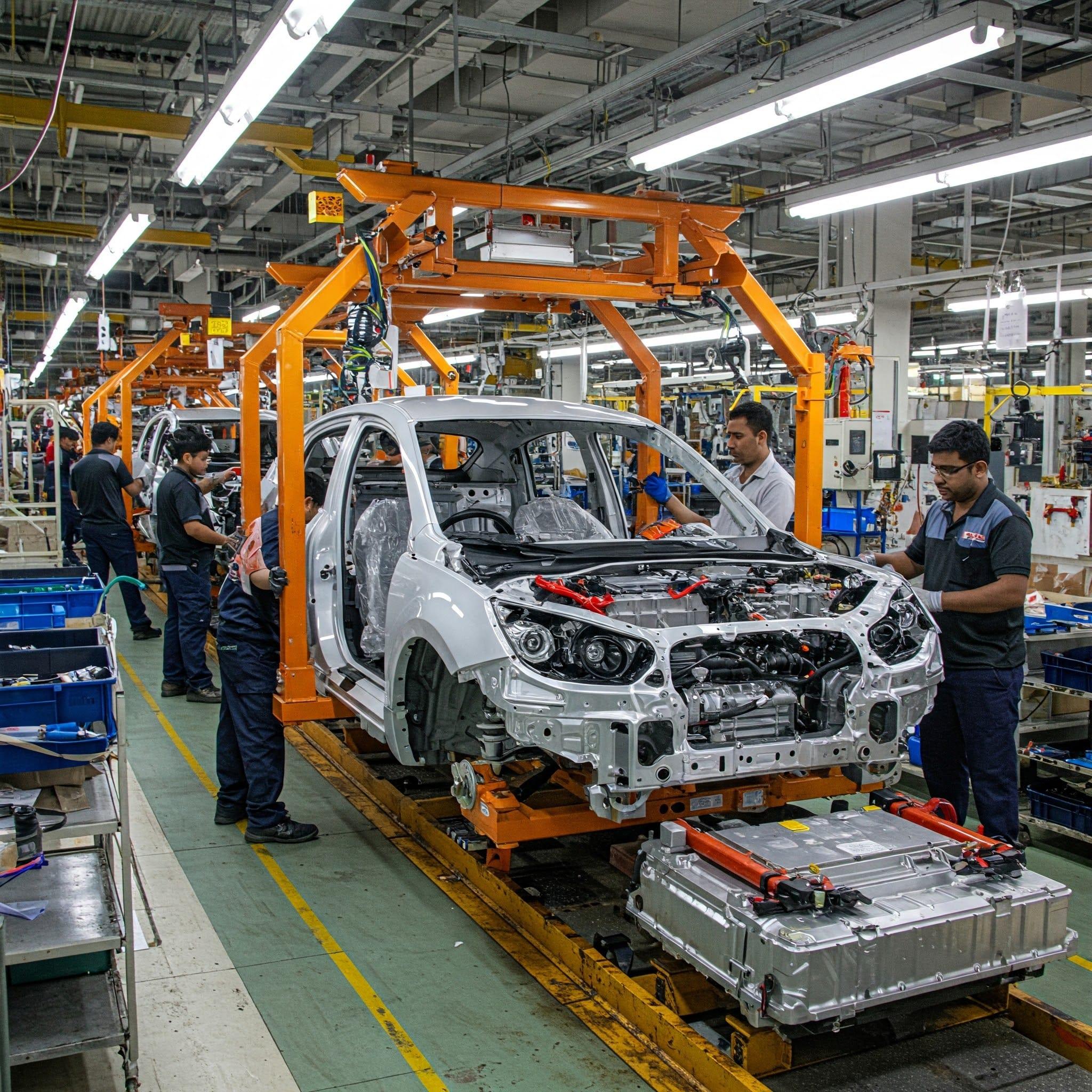
Manufacturing is evolving at the same time. Automation, digital quality systems, data-driven processes and advanced materials are helping manufacturers improve production efficiency, quality and consistency. These technologies will become increasingly relevant as vehicle architectures and manufacturing processes become more advanced.
What Does the Future Hold for India’s Automotive Sector?
India is developing capabilities across both automotive manufacturing and technology. A large domestic market, strong engineering capabilities, growing electric mobility and investment in new technologies are creating opportunities across the automotive value chain.
The coming years will raise important questions for manufacturers, suppliers and technology companies. How quickly will electric mobility expand? What role will hybrid vehicles play? How will AI influence automotive R&D and manufacturing? How effectively can India develop domestic capabilities in batteries, electronics and other critical automotive technologies?
The answers to these questions will help shape the next stage of India’s automotive industry as it moves toward a more connected, efficient and technology-driven mobility ecosystem.